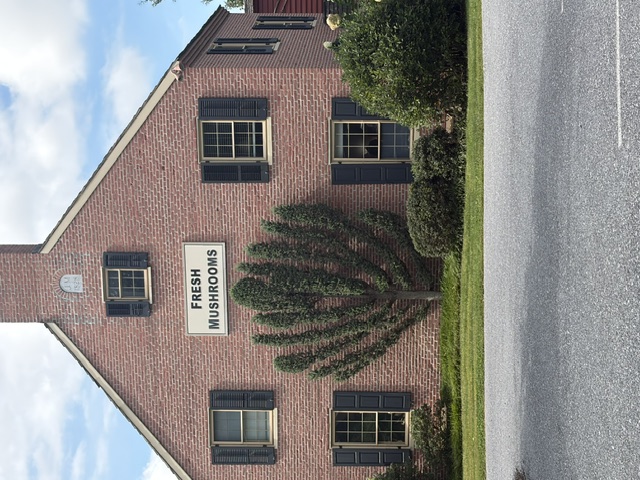
Still in the Family, Four Generations Later
The shop is called The Woodlands at Phillips, and it’s run out of the family’s original 1828 farmhouse - the same one they’ve owned since 1890. Phillips Mushroom Farms itself has grown into one of the largest specialty mushroom grower in the country, spread across farms in Pennsylvania and Maryland now, which is a strange thing to sit with when you’re standing in a 200-year-old kitchen talking to one of four sisters who currently run the store: Linda Phillips-Steller, Jill Phillips-Gray, Sharon Phillips, and Meg Phillips-Rush. Four generations removed from a guy experimenting with ice blocks, and it’s still, functionally, a family business being run by the family.
I talked to Linda.
What Linda Told Me
Linda told me that growing up a Phillips was an adventure. The last name wasn’t just something on the sign out front, it meant you worked. Production line, fulfillment, whatever needed doing that week. Not a family that owns a mushroom farm but a family that is one, in the sense that there was apparently no clean line between the two.
One detail stopped me more than I expected: mushrooms, even now, even at the scale Phillips operates at, are picked by hand. Not because anyone’s being sentimental about it, because a mechanical harvester would damage the next flush of mushrooms trying to grow in the same bed. You can’t run a machine over something that’s still, in a very real sense, about to happen again. So, it’s still people, still hands, still someone walking a row and making a judgment call on every single mushroom. I hadn’t thought about the fact that a food this common, the kind you buy without a second thought, is still, structurally, incapable of being automated in the way almost everything else in a grocery store is.
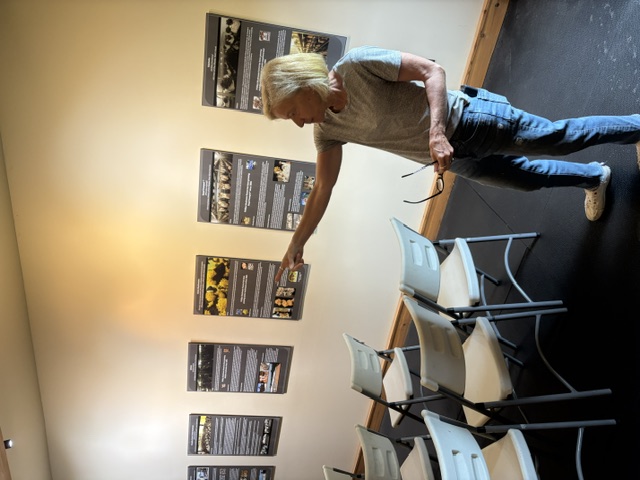
There’s still art in this – there’s history and tradition– this can’t be outsourced to AI.
And then there was the story about the loam, which I keep turning over.
The family came from England, generations back, and settled in Chester County, and as Linda told it, part of why they stayed here —this particular stretch of Pennsylvania, and not somewhere else, came down to the soil…Loam. It’s a word I knew existed before that conversation and had never once had a reason to use: a soil that’s roughly balanced between sand, silt, and clay, holding enough moisture to be useful without turning to mud, loose enough to breathe. Farmers apparently talk about it the way sommeliers talk about terroir. It’s like it’s not just dirt, but a kind of inheritance the land gives you if you’re lucky enough to land on it.
The Box That Changes Every Week
The part of the visit that’s stuck with me since is the fresh mushroom box - not one variety, but a rotating mix based on whatever’s actually being harvested that week.
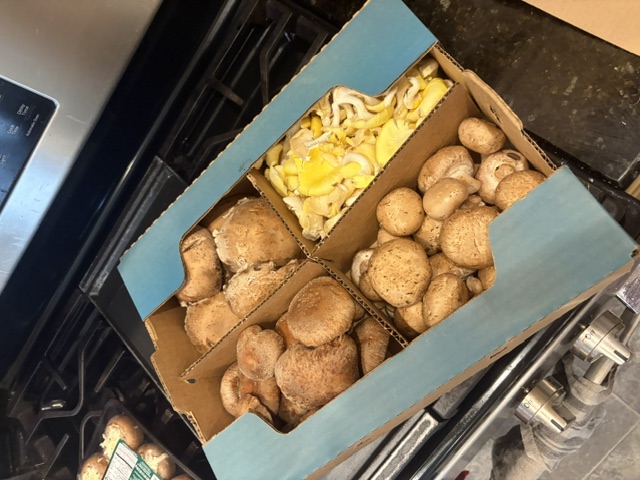
It’s a smart answer to a problem I hadn’t thought about until I stood in that shop: almost nobody has cooked with a maitake or a lion’s mane on their own initiative. A curated box that just shows up with something unfamiliar in it is a much lower-friction way to get someone to try it than expecting them to go looking.
Linda knew each mushroom in the box and how to prepare each variety for taste, texture, and profile.
The Museum Part, Which I Did Not Expect
Attached to the shop is a free exhibit on how mushrooms are actually grown, the substrate, the process, etc. It is, as far as I can tell, the only museum in the world dedicated entirely to mushrooms. I did not expect to spend as long in there as I did and Linda graciously guided me through her own family history.
If you’re ever near Kennett Square, it’s worth the stop on its own, whether or not you buy anything. Their full shop of fresh mushrooms, dried, gourmet products, even mushroom coffee is at The Woodlands at Phillips.
This is the part of Penn Mushrooms I like best so far, honestly. Not the part where I’m troubleshooting why a page won’t load, but the part where I get to sit in a 200-year-old farmhouse and listen to someone talk about mushrooms with more knowledge in one conversation than I’ve accumulated in months of reading about them. If you know a farm I should visit next, let me know.
Sources: Kennett Collaborative, Atlas Obscura, Phillips Gourmet, VegWorld Magazine, Organic Producer Network.